Overview
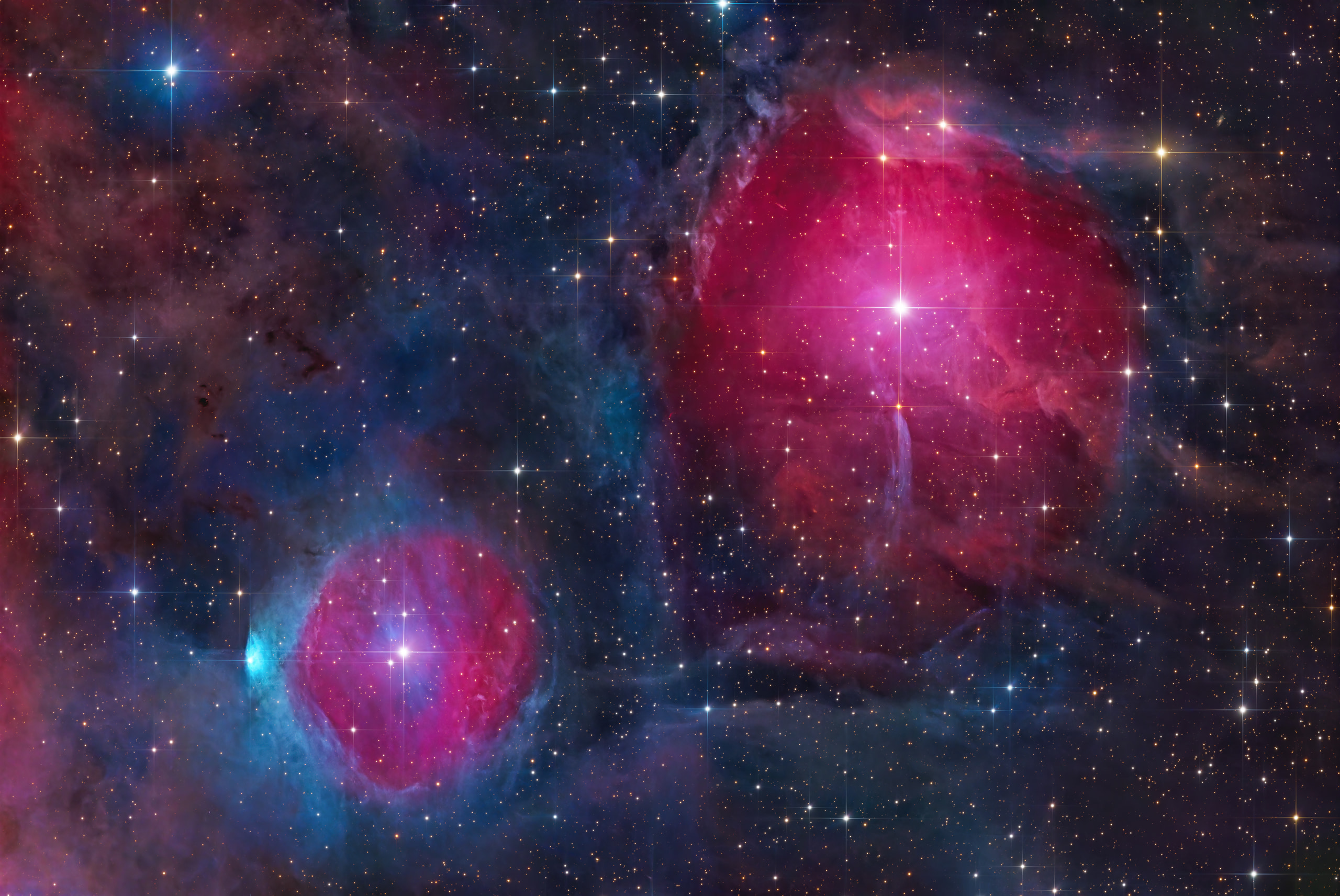
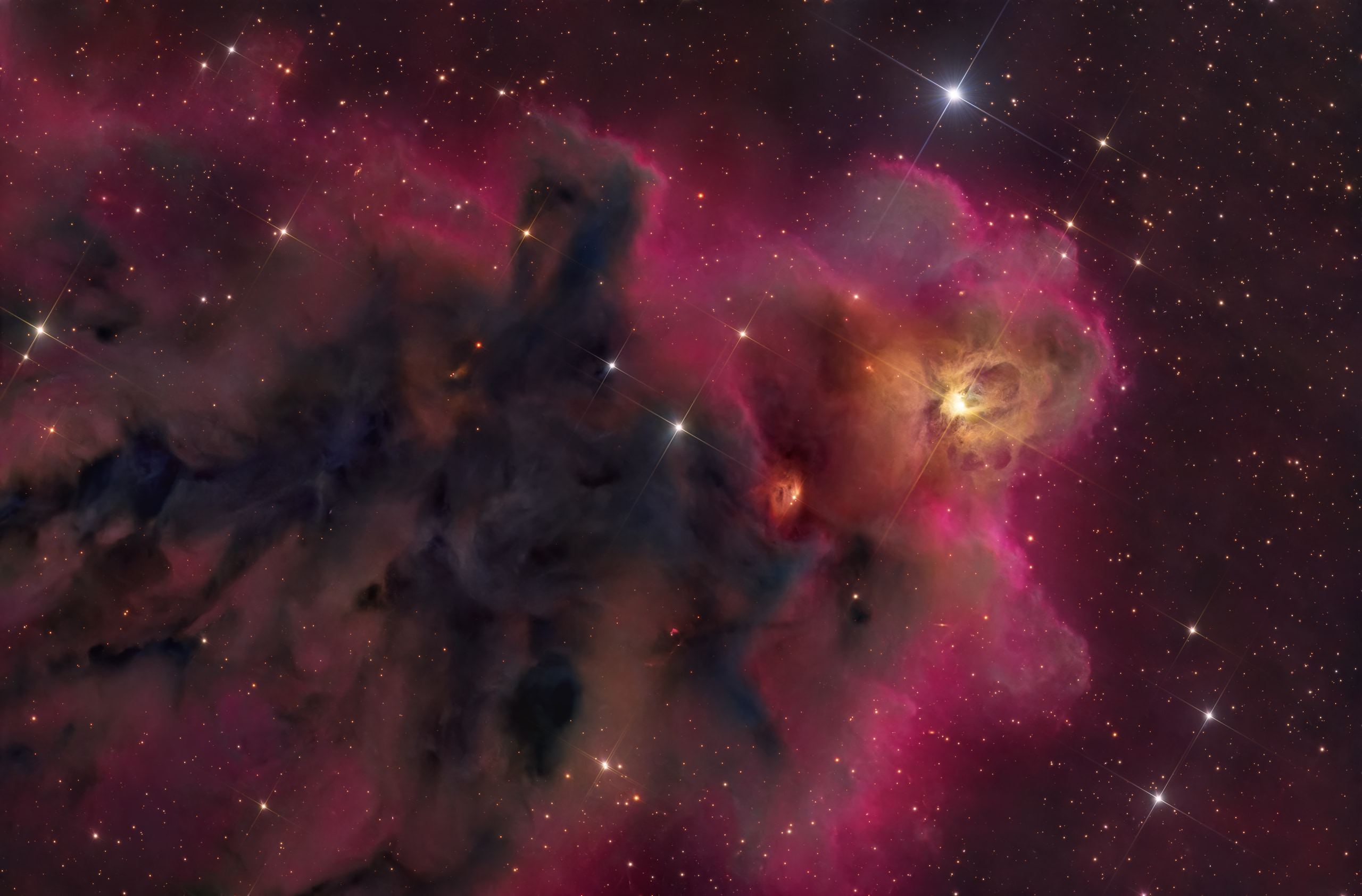
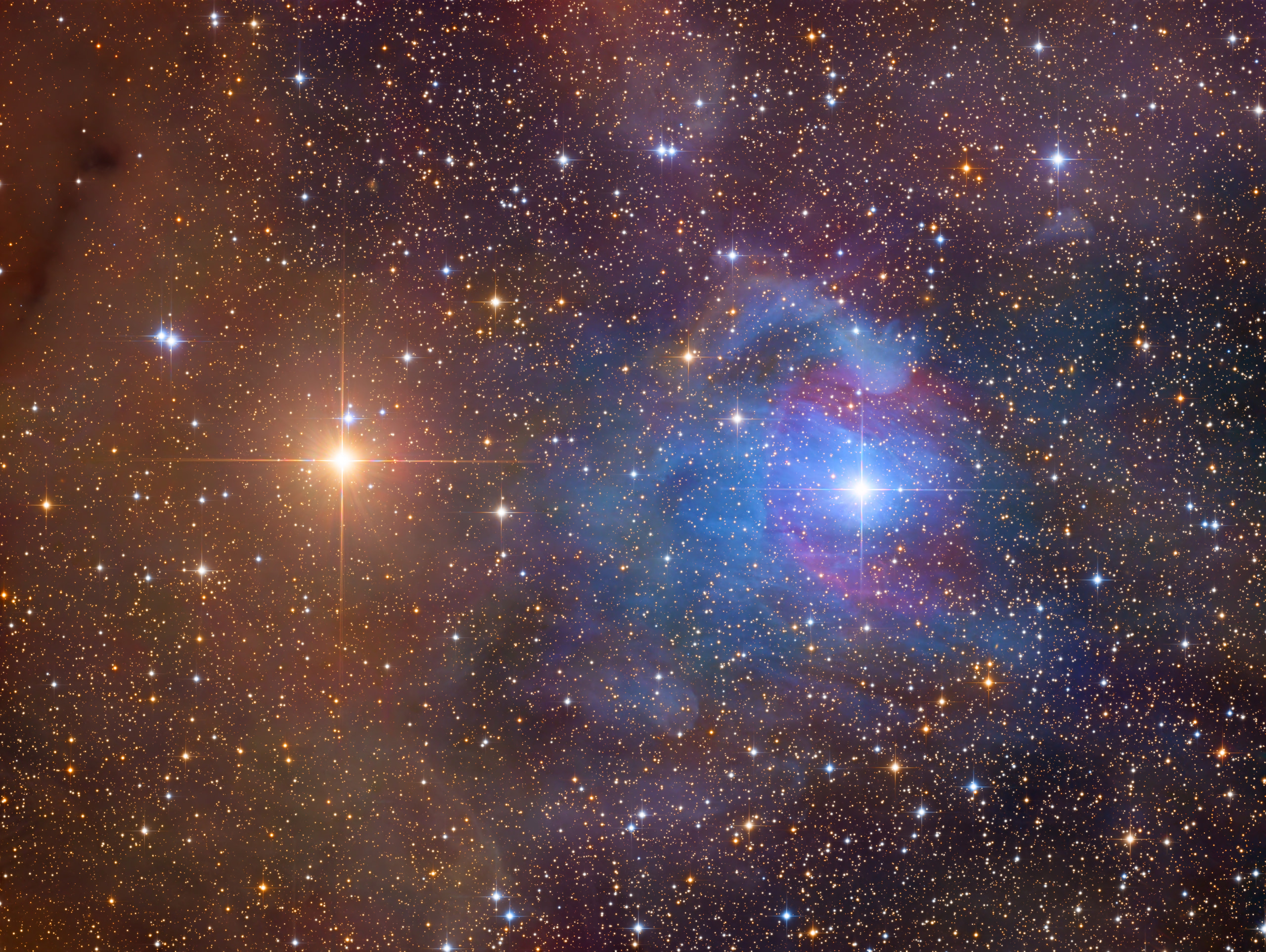
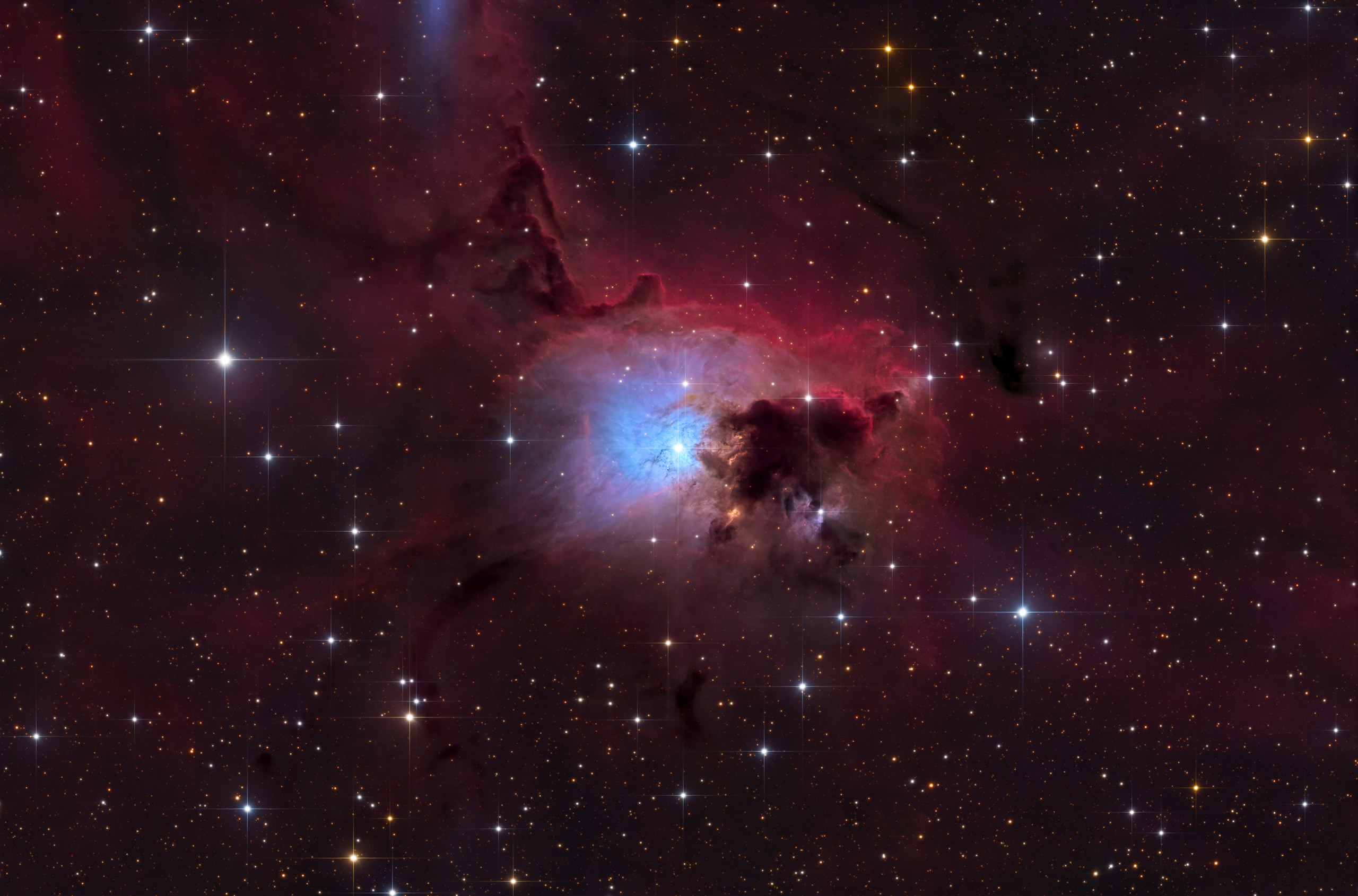
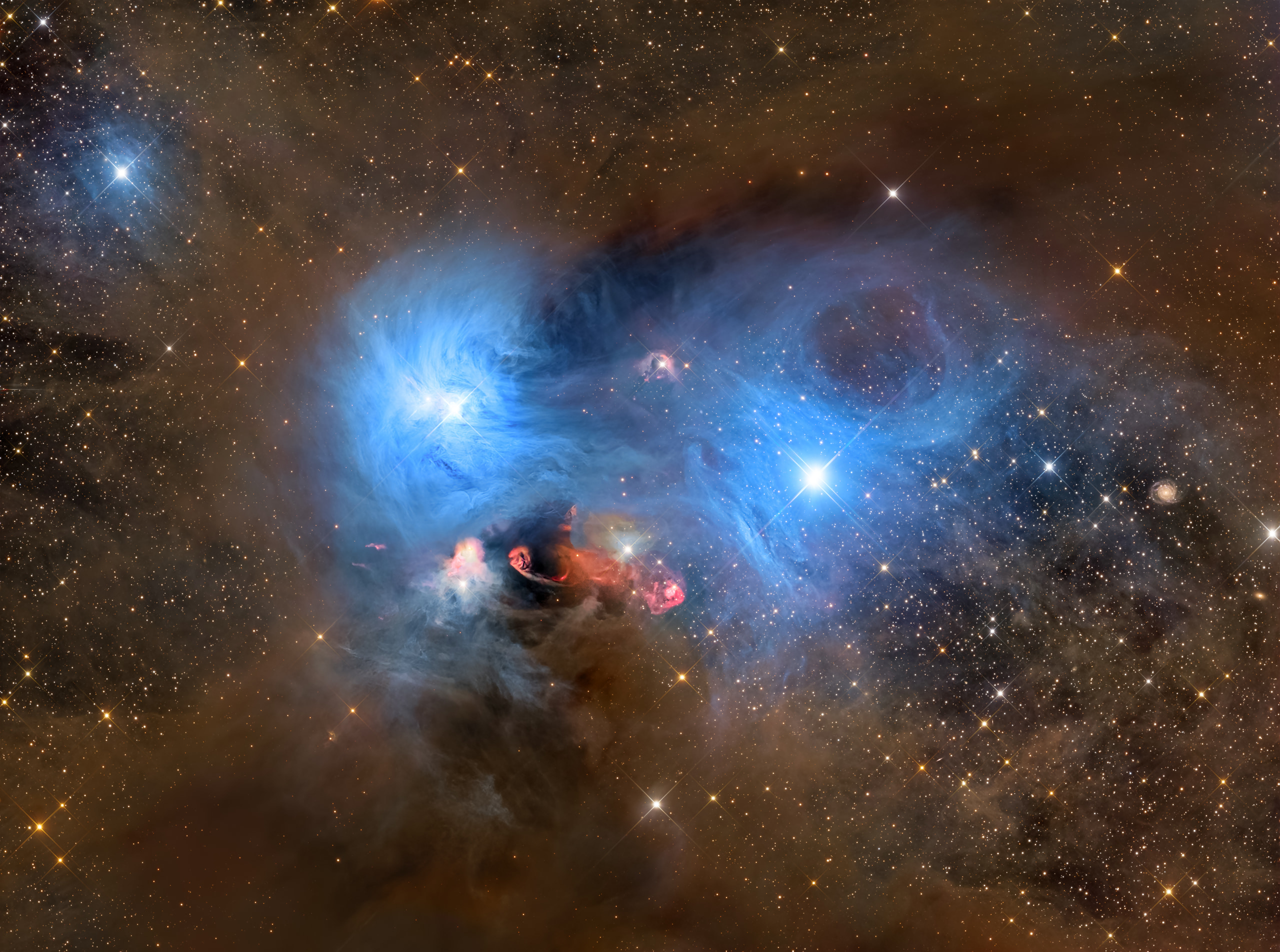
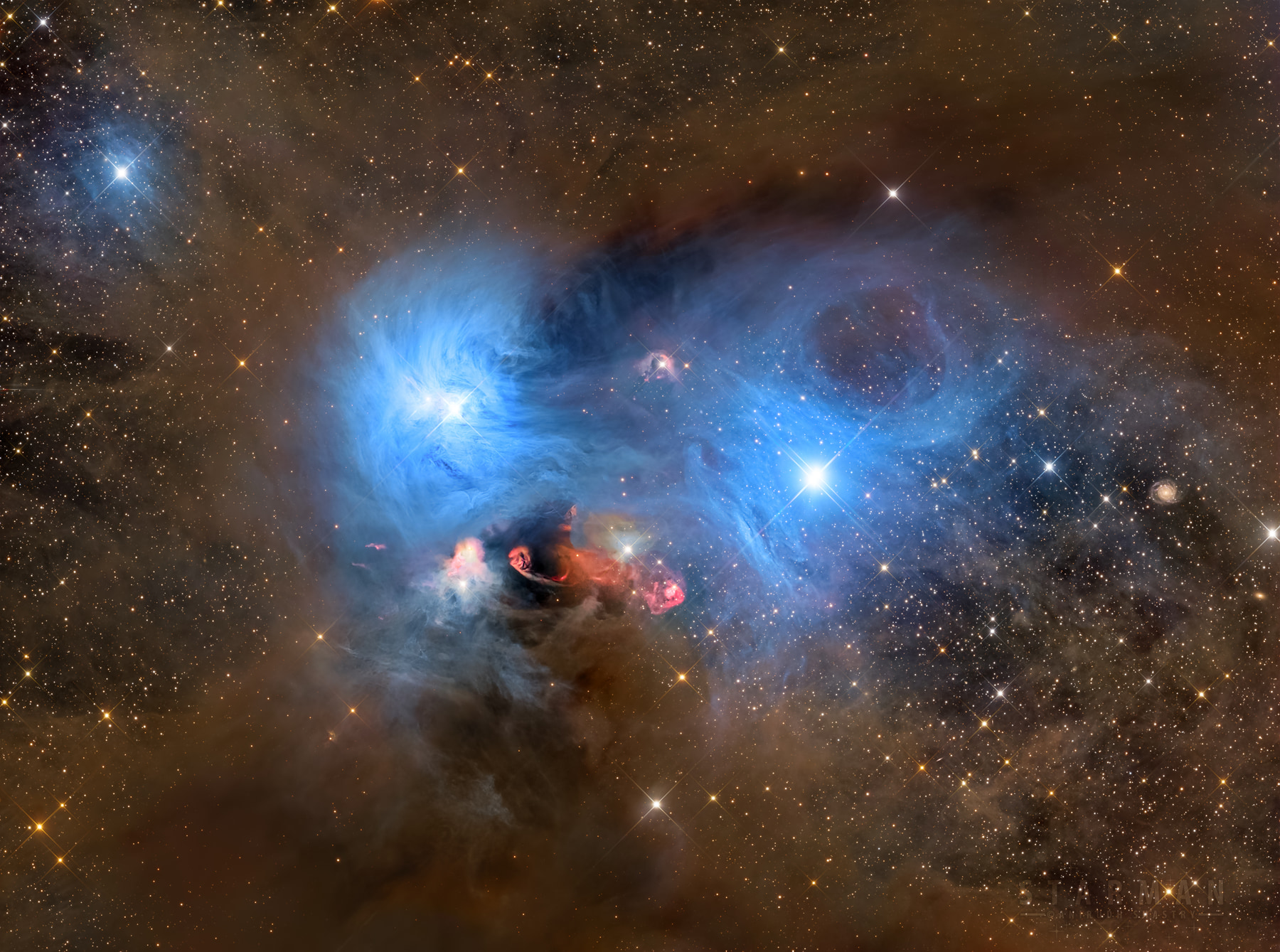
Bernes 157 is the bright heart of the Corona Australis molecular cloud — a luminous complex of nebulosity anchored in the densest reaches of one of the nearest stellar nurseries to Earth, a mere 500 light-years away. Its catalogue tells the story: Bernes’ 1977 survey collected bright nebulae buried inside opaque dust clouds, and few entries embody that paradox as completely as this one. Here, where the cloud grows thick enough to swallow the background Milky Way whole, the newest stars have set the dust ablaze — electric blue where their light scatters off the surrounding grains, amber where distant starlight filters through the thinner veils, and utterly black in the cold lanes that still keep their secrets.
The twin apparitions at the center of the field are NGC 6726 and NGC 6727, two of the finest reflection nebulae in the southern sky, glowing like paired ghosts against the cloud that made them. To their side, a second luminous swirl curls around its own hollow of shadow, the dust folding into an almost perfect ring — a reminder that these clouds are not static scenery but slow, turning weather systems of gas and grain. And tucked beneath the blue, in the most turbulent corner of the image, lies the fan-shaped variable nebula NGC 6729, flickering around the young stars R and T Coronae Australis as they gather their final mass.
This is where the hydrogen-alpha data earns its hours. The small crimson arcs and knots embedded in the central darkness are Herbig-Haro objects — shock fronts hammered into the cloud by jets from protostars still hidden inside their dusty envelopes. They are among the most fleeting structures in astronomy, changing on timescales of years rather than millennia: the visible exhaust of stars in the very act of being born. In a field otherwise painted in reflection and shadow, these red signatures are the only places where the cloud itself is being forced to glow.
What I love most about Bernes 157 is the paradox at its core: the brightest nebulosity in Corona Australis lives in the densest part of the cloud. The very material that hides these young stars from view is also what makes them visible — every fold of illuminated dust is a lantern lit from within, light carved out of the deepest dark. Look closely at the edges of the frame and you can even see small galaxies shining through the thinner veils, entire islands of hundreds of billions of stars reduced to faint smudges behind a cloud in our own backyard. The nearest and the farthest things in the image, separated by a hundred million times in distance, share a single field of view.
Over 33 hours of integration went into this rendering — deep luminance to trace the faintest dust at the threshold of visibility, RGB to preserve the delicate contrast between the amber cloud and the blue fire of the reflection nebulae, and long 3nm hydrogen-alpha exposures to isolate the Herbig-Haro shocks buried in the dark.
Captured from my remote setup at Obstech in Chile:
🔭 PlaneWave CDK500 Observatory System
📸 Moravian C5A-100M Camera
🎨 Chroma L, R, G, B, and 3nm Ha Filters
📀 L: 61×600s, R: 59×300s, G: 59×300s, B: 47×300s, Ha: 29×1200s (33.58 hours)
🖥️ Processed in PixInsight and Adobe Photoshop