Overview
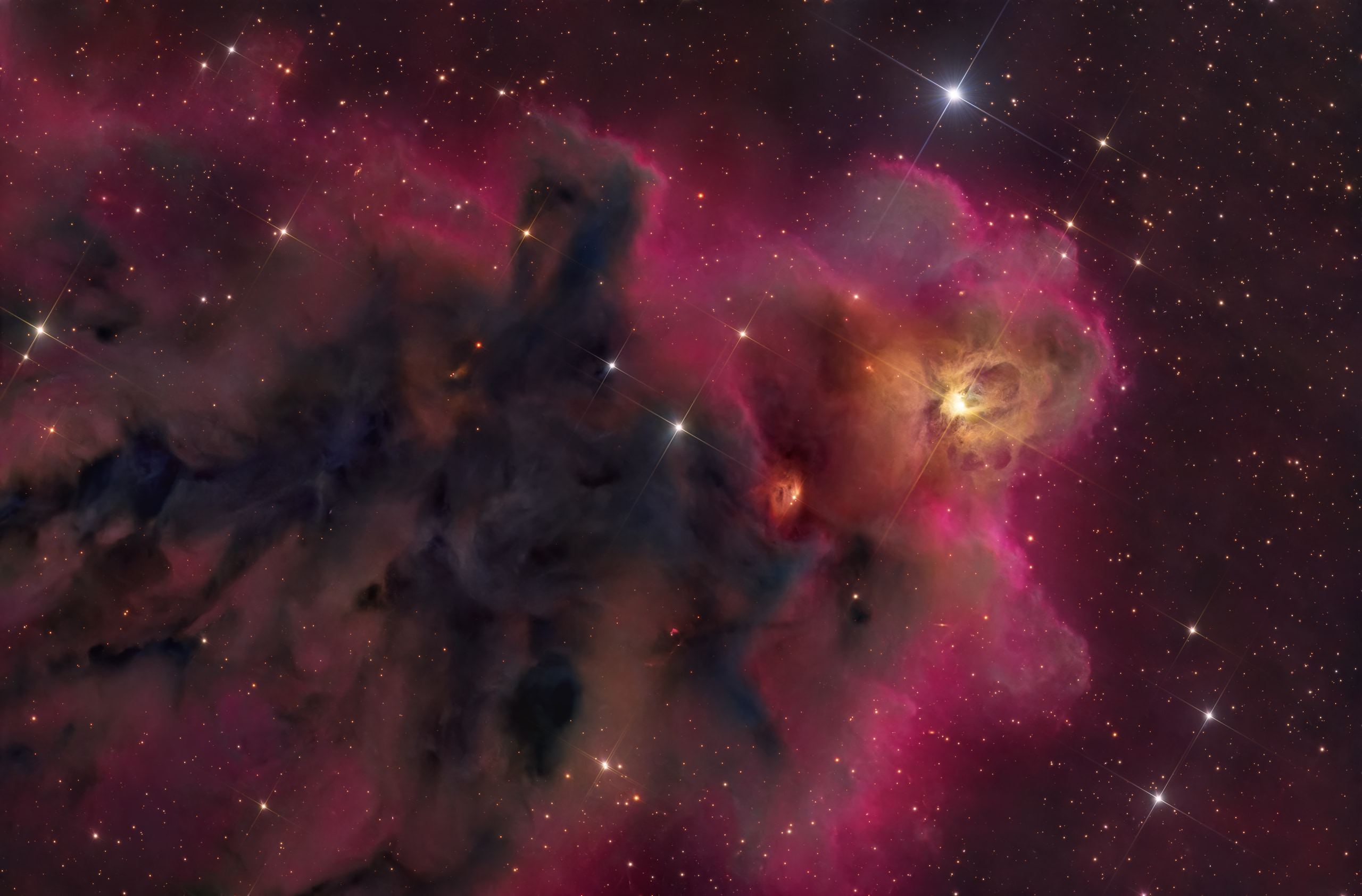
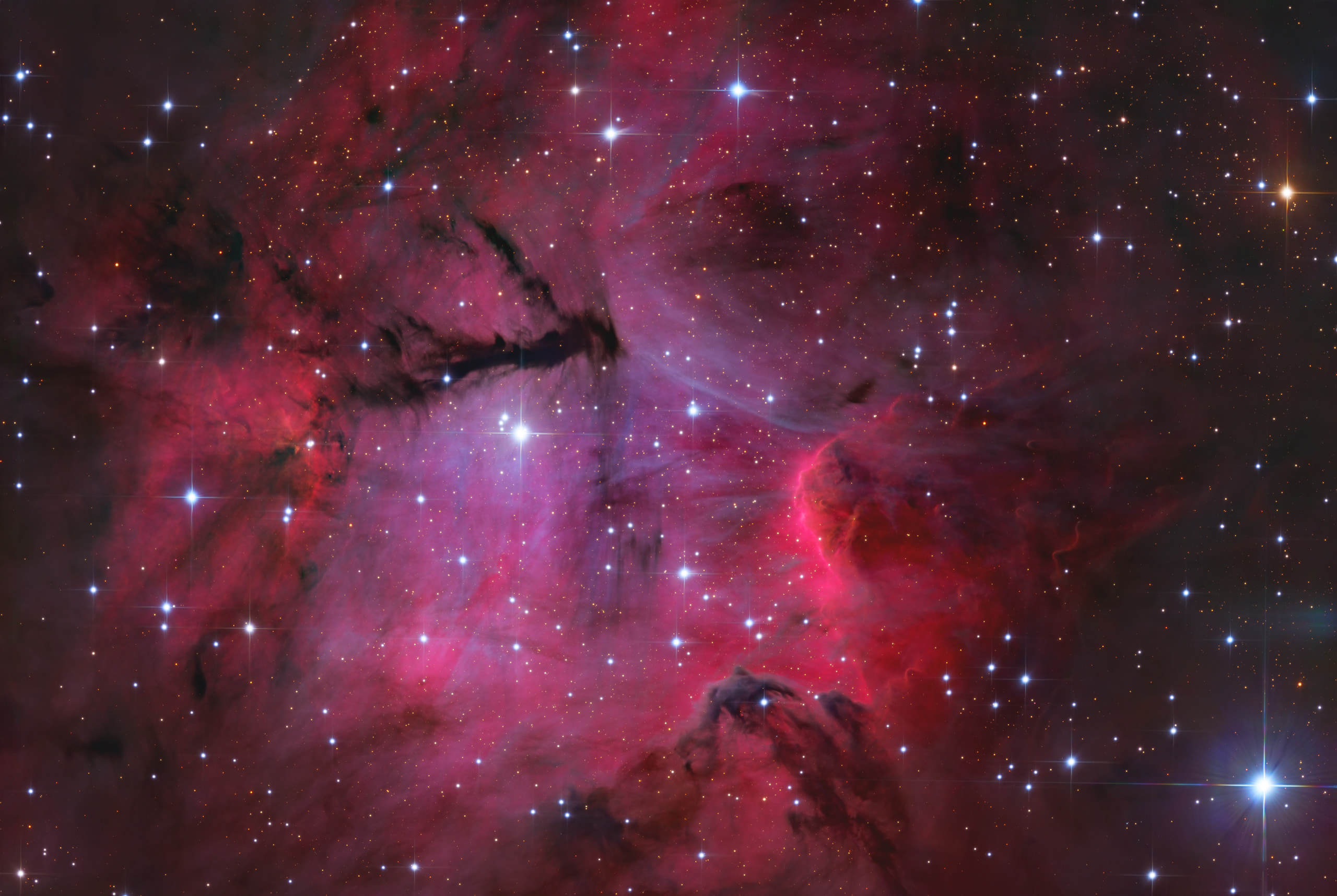
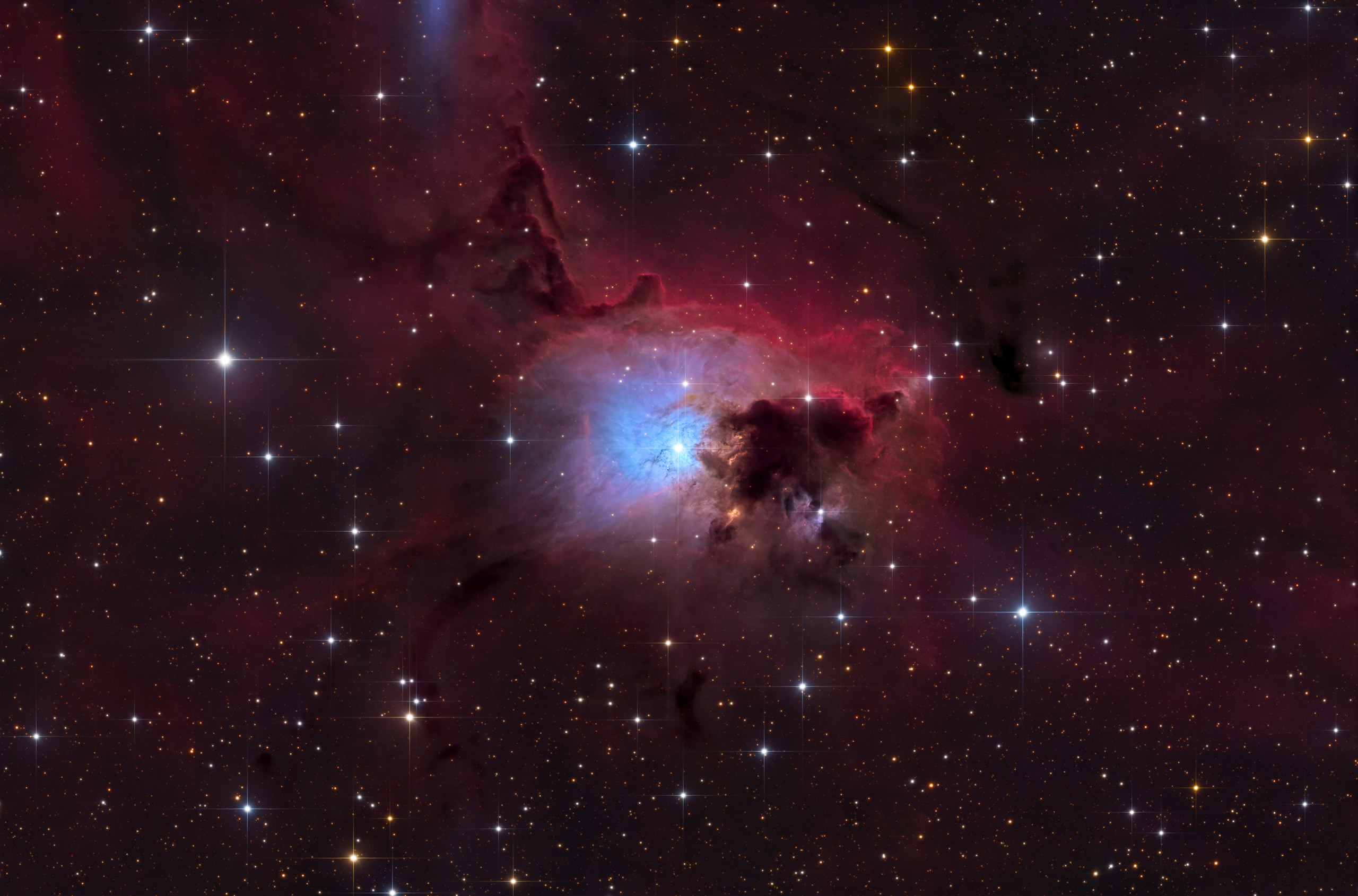
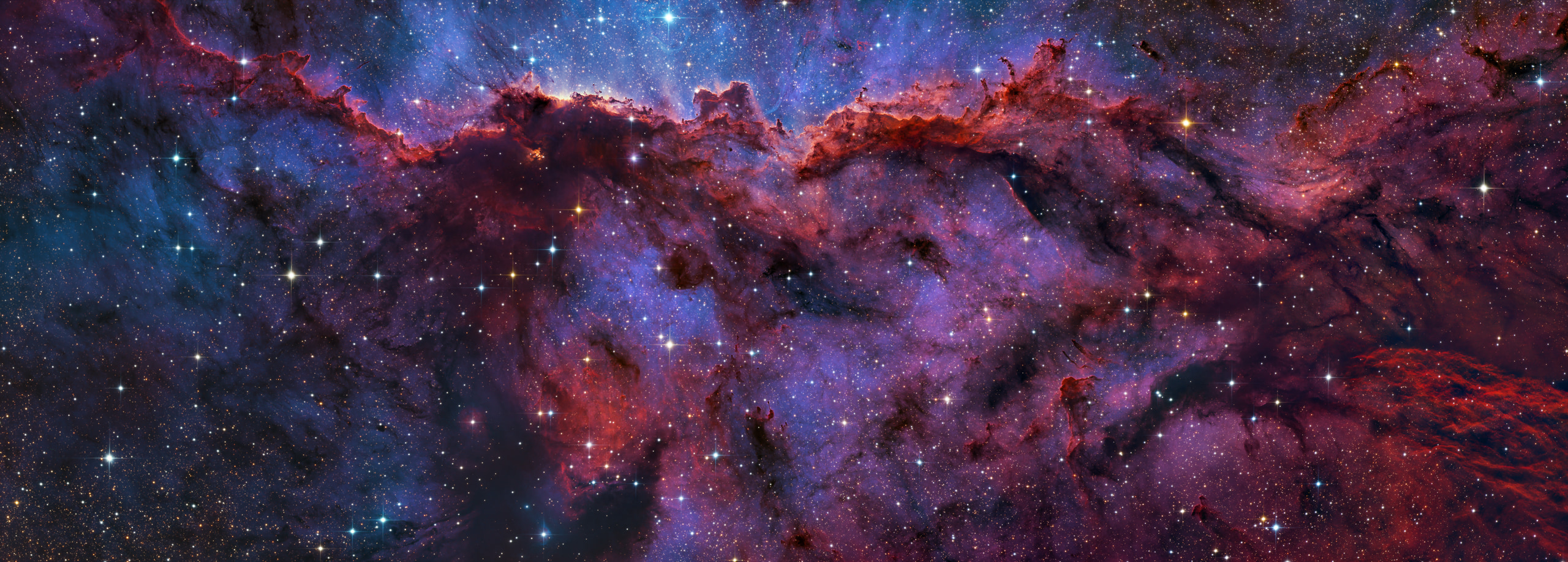
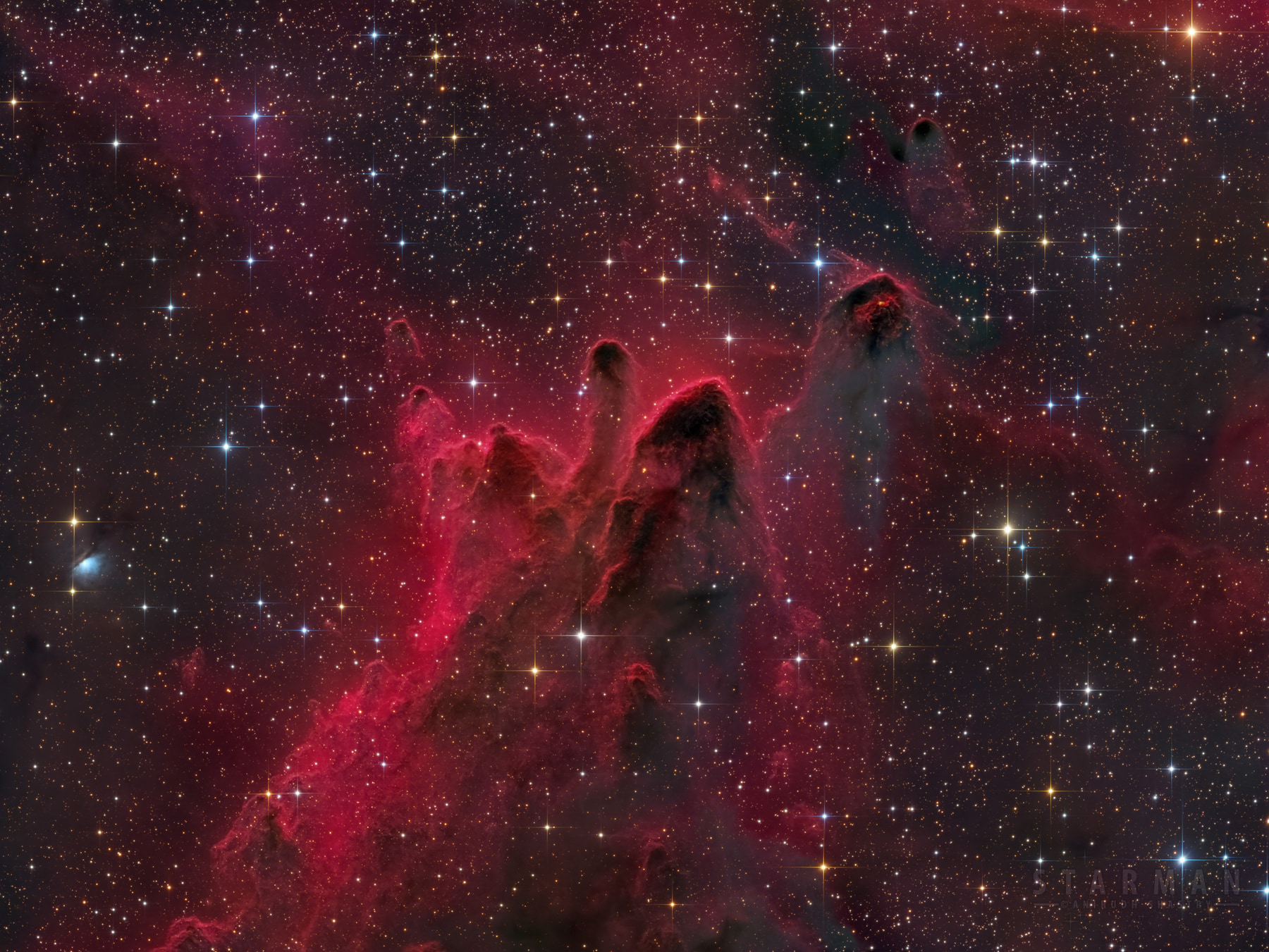
CG 30 is one of those rare objects that seems less like a nebula than a weather system moving through deep space — a procession of dark, wind-carved globules drifting through the red hydrogen glow of the Gum Nebula. Its dense heads of dust and molecular gas appear almost sculptural here, their opaque forms standing in silhouette against the surrounding emission, while faint tendrils trail away like smoke caught in a stellar tide.
These cometary globules are not comets at all, but cold, compact star-forming clouds being shaped by the radiation, winds, and ancient violence of their environment. CG 30 belongs to the CG 30/31/38 complex in Puppis, a southern region associated with young stellar objects, Herbig-Haro activity, and ongoing low-mass star formation. Within the dark knots, stars are still assembling; outside them, the broader nebular field glows with the light of hydrogen excited across the vast shell of the Gum Nebula.
What I love about this field is the contrast between delicacy and force. The scene is filled with fine red veils, blue-white stars, and a near-infinite dusting of golden background light, but the globules themselves feel massive and stubborn — small islands of night resisting the luminous pressure around them. The result is a portrait of creation under siege: stars forming inside darkness, while the surrounding universe slowly erodes the very clouds that give them birth.