
Overview
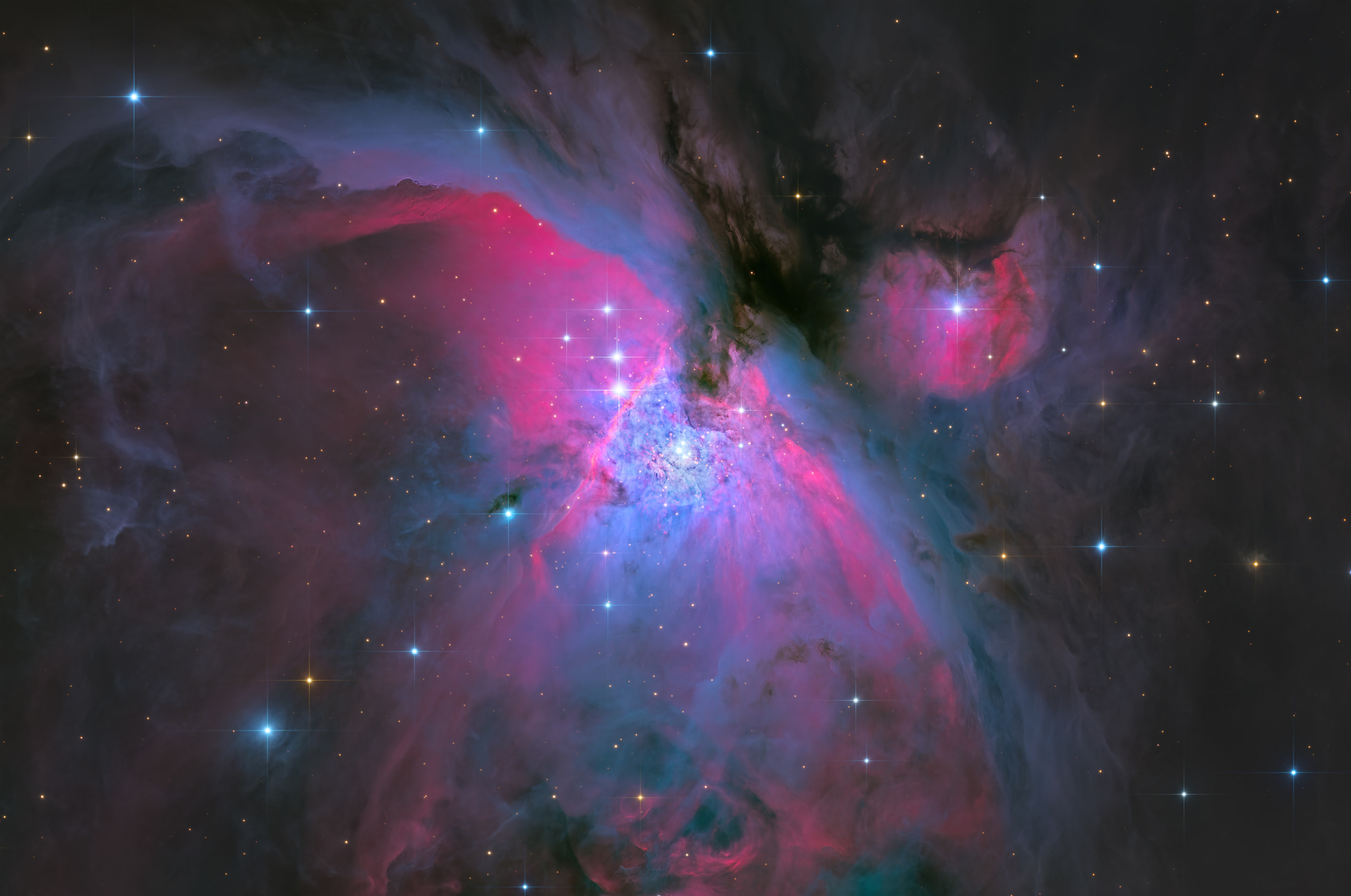
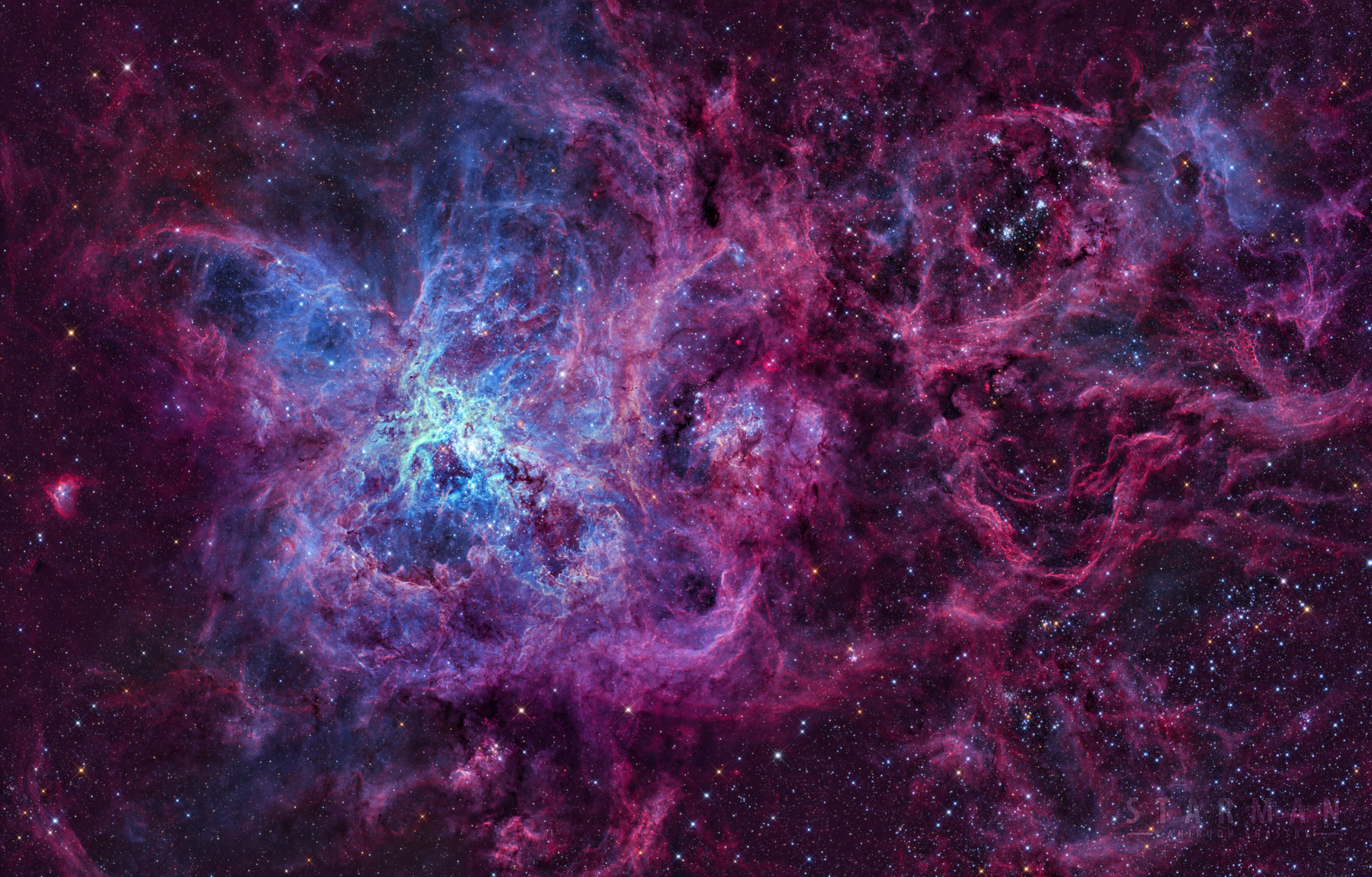
NGC 2070, the brilliant core of the Tarantula Nebula in the Large Magellanic Cloud, is one of the most energetic star-forming regions in the local universe. Located roughly 160,000 light-years away, this massive H II region is dominated by the intense radiation and stellar winds from the central cluster R136, home to some of the most massive and luminous stars known.
This was supposed to be the first narrowband target I captured through my PlaneWave CDK500 system at Obstech. I had been switching back and forth between Voyager Advanced and NINA with Target Scheduler for acquisition as I was iterating on the system. While I had set up the former correctly, about half-way through imaging, I realized that I hadn’t set the gain settings correctly in Target Scheduler. This user error meant that I ended up with roughly half the narrowband subs at gain 0, and the other half at gain 2750.
Rather than start over from scratch, I decided to process just the RGB data of which I had just 30 minutes each per filter, that I had captured for stars alone, and definitely not meant to be the nebular data. This is completely antithetical to my usual process, where I try to acquire at least 20+ hours of data. Even with an exceptionally modest total integration of just 1.5 hours, the image reveals a wealth of structure: glowing ionized gas sculpted into filaments and cavities, sharp dust lanes silhouetted against the nebular emission, and subtle color gradients tracing variations in temperature and composition. The bright blue-white stellar population contrasts beautifully with the warmer tones of the surrounding gas, highlighting the violent interplay between newborn stars and their natal environment.
This image underscores both the optical performance of the system and the sheer intrinsic brightness of NGC 2070. Few regions in the sky deliver so much detail so quickly—making the Tarantula Nebula’s core a truly remarkable target, even under tightly constrained acquisition times.
Captured from my remote setup at Obstech in Chile:
PlaneWave CDK500 Observatory System
Moravian C3-61000 PRO Camera
Chroma R, G, and B Filters
R: 15×120s, G: 15×120s, B: 15×120s (1.5 hours)
Processed in PixInsight and Adobe Photoshop