Overview
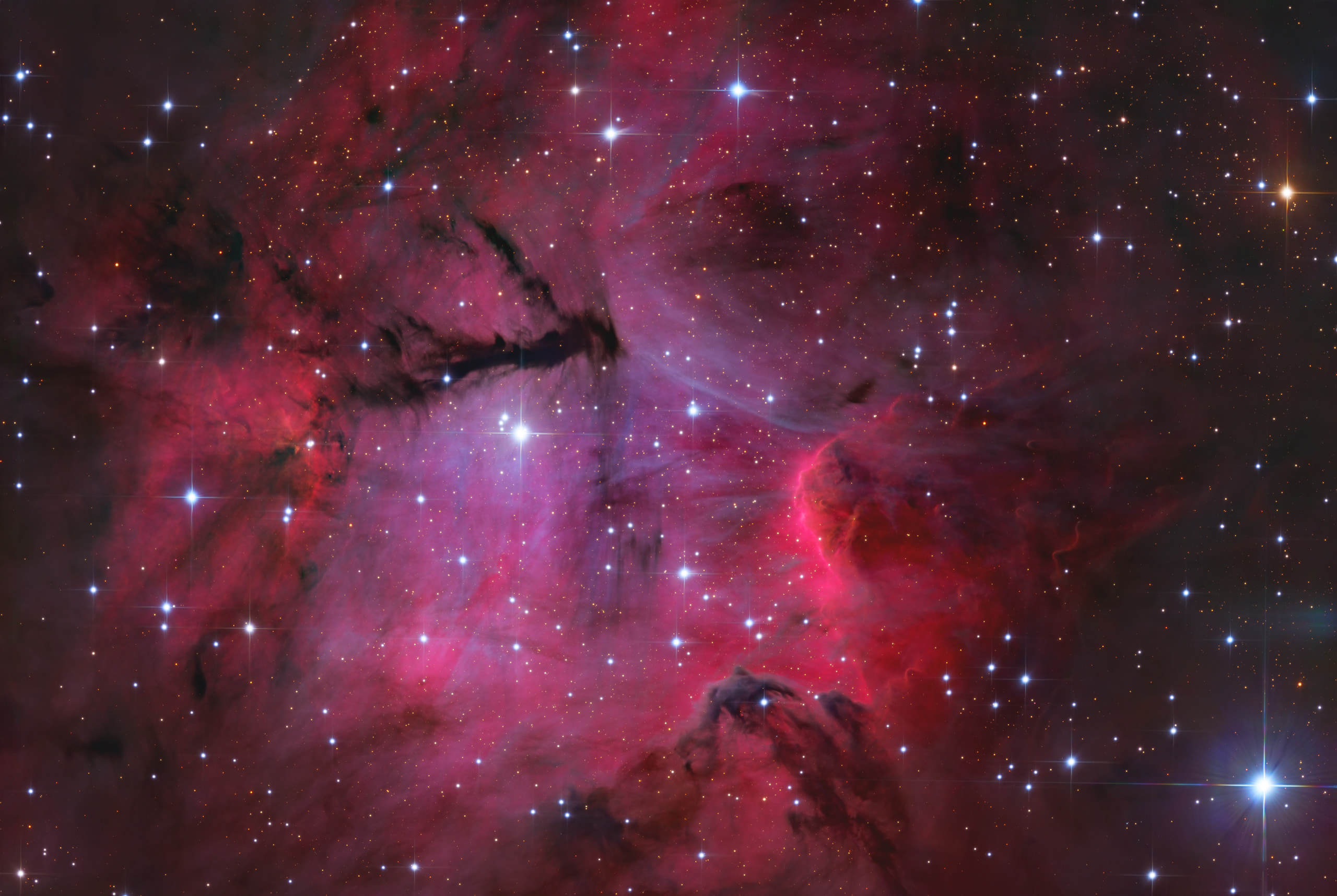
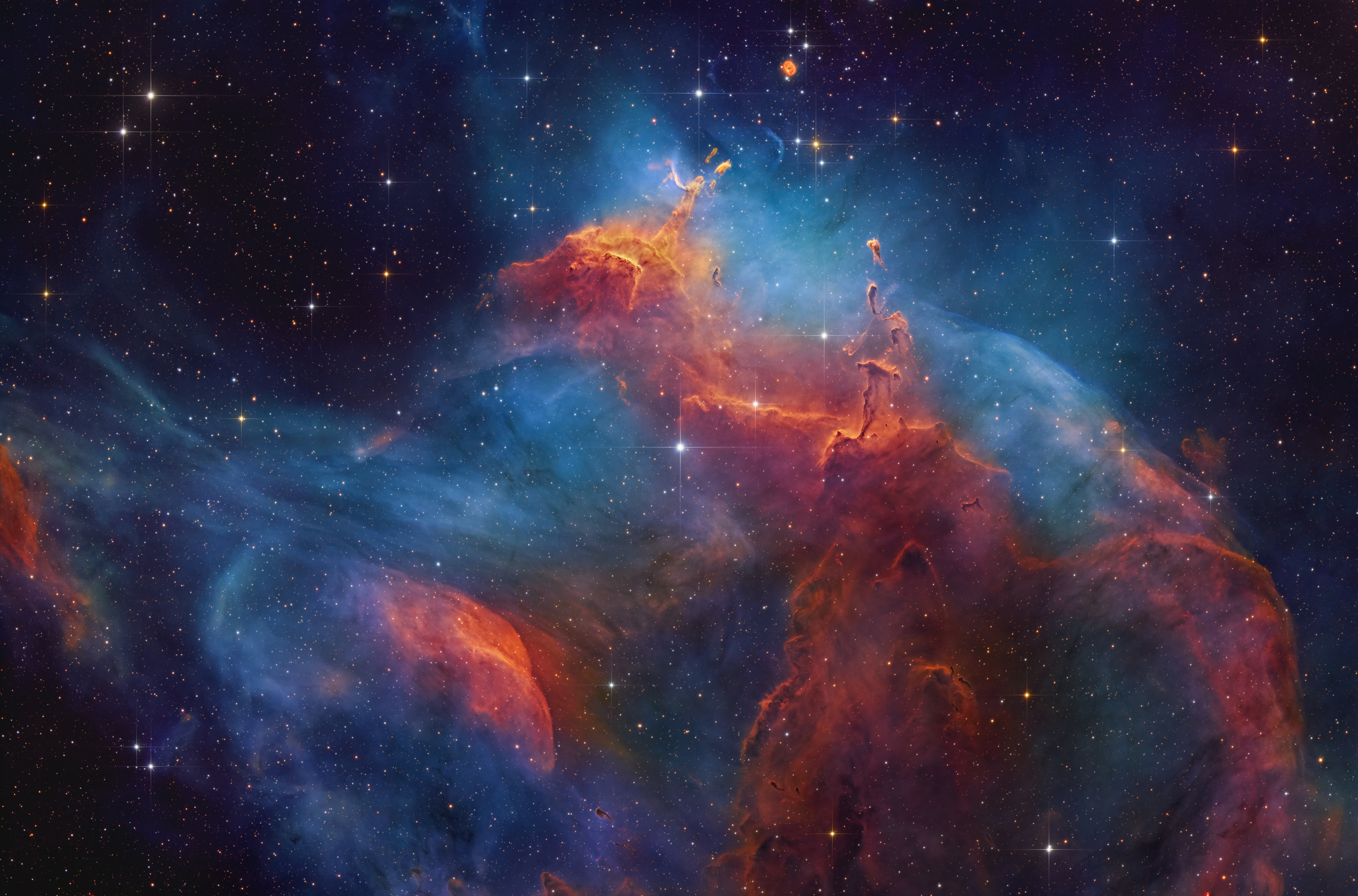
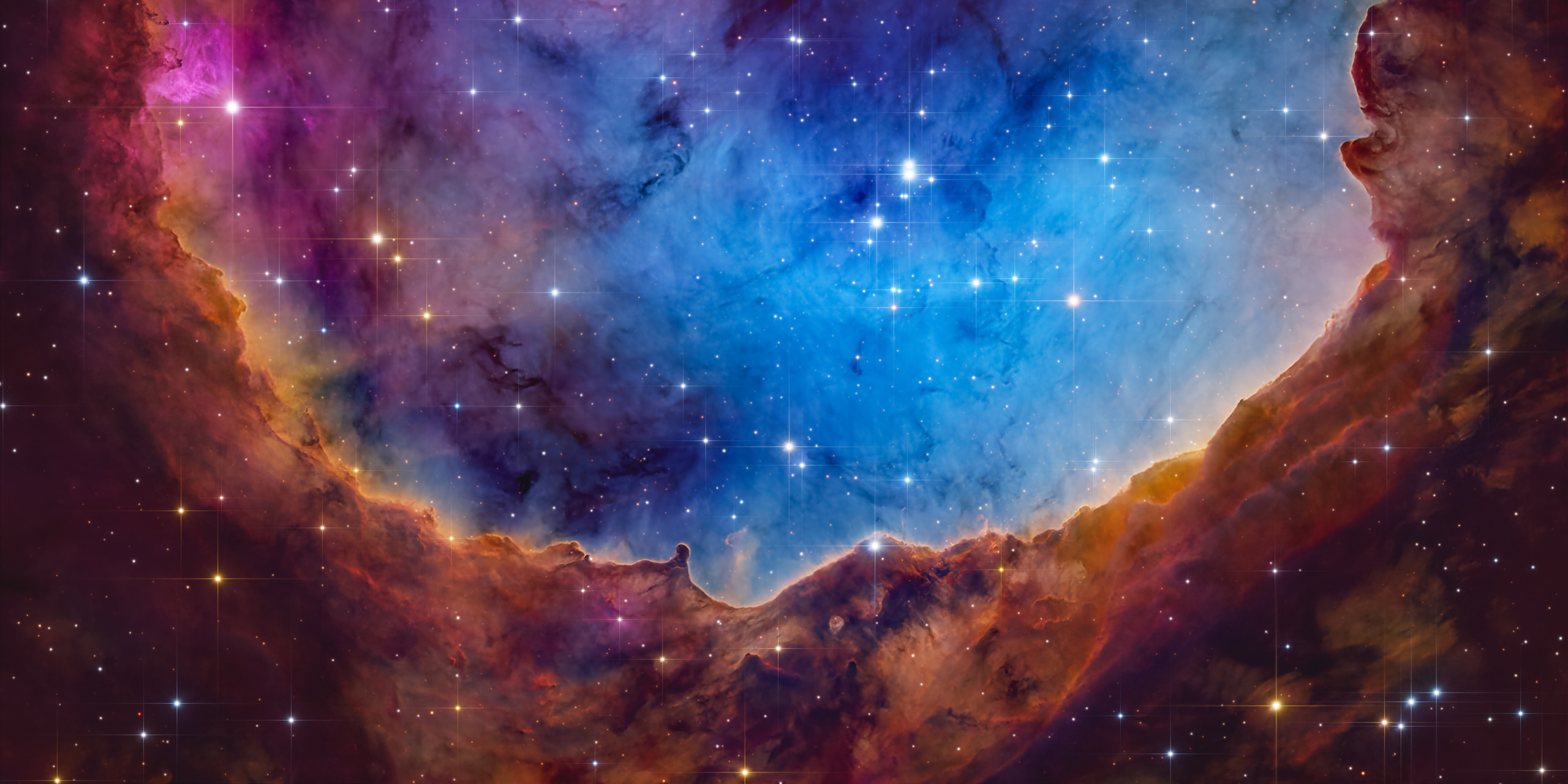
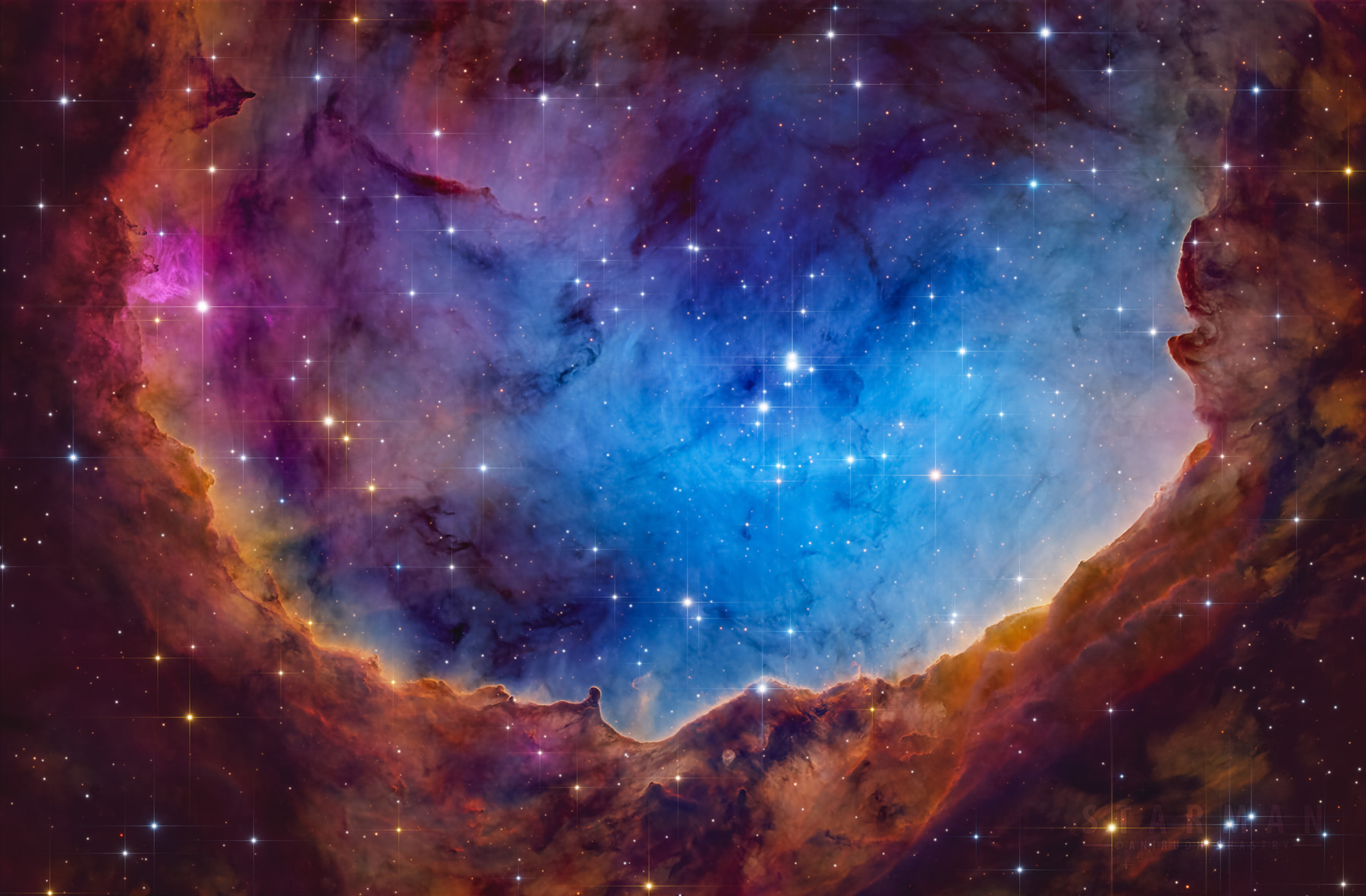
There are objects that feel less like “targets” and more like places. NGC 3324 sits on the northwestern rim of the greater Carina complex, where a young cluster’s ultraviolet light and stellar winds have hollowed out a cavern inside the surrounding nebula (Gum 31). The result is this dramatic boundary layer—dust and gas sculpted into luminous escarpments—what Webb famously revealed as the Cosmic Cliffs: a glowing coastline where the interstellar medium is being actively reshaped, grain by grain, photon by photon.
In my image, the scene reads like a bowl of starlight poured into shadowed stone: a bright, electric-blue interior fading into smoky indigo, while warm ochres and ember-toned ridges curl around the frame like weathered cliffs at sunset. Along the edges, you can almost feel the “mist” of ionized gas flowing off the cloudtops—an illuminated erosion front, where dense dust holds its ground while the lighter material is swept away.
The SHO was rendered in a classic Hubble palette, with targeted refinements to bring out the unique structure in each emission channel—dusty cliff edges and compressed ridges in Sii/Ha, and the delicate, mist-like cavity glow in Oiii. The RGB data was used specifically for the stars, so their colors remain natural and accurate against the narrowband canvas. Final contrast work focused on preserving the faint boundary transitions while keeping the cliff faces crisp and three-dimensional, so the scene holds together as a coherent “cosmic shoreline” rather than a collection of disconnected bright features.
On an interesting side note, this is “first light” from the Moravian C5A-100M camera that I bought from @Mark McComiskey.