Overview
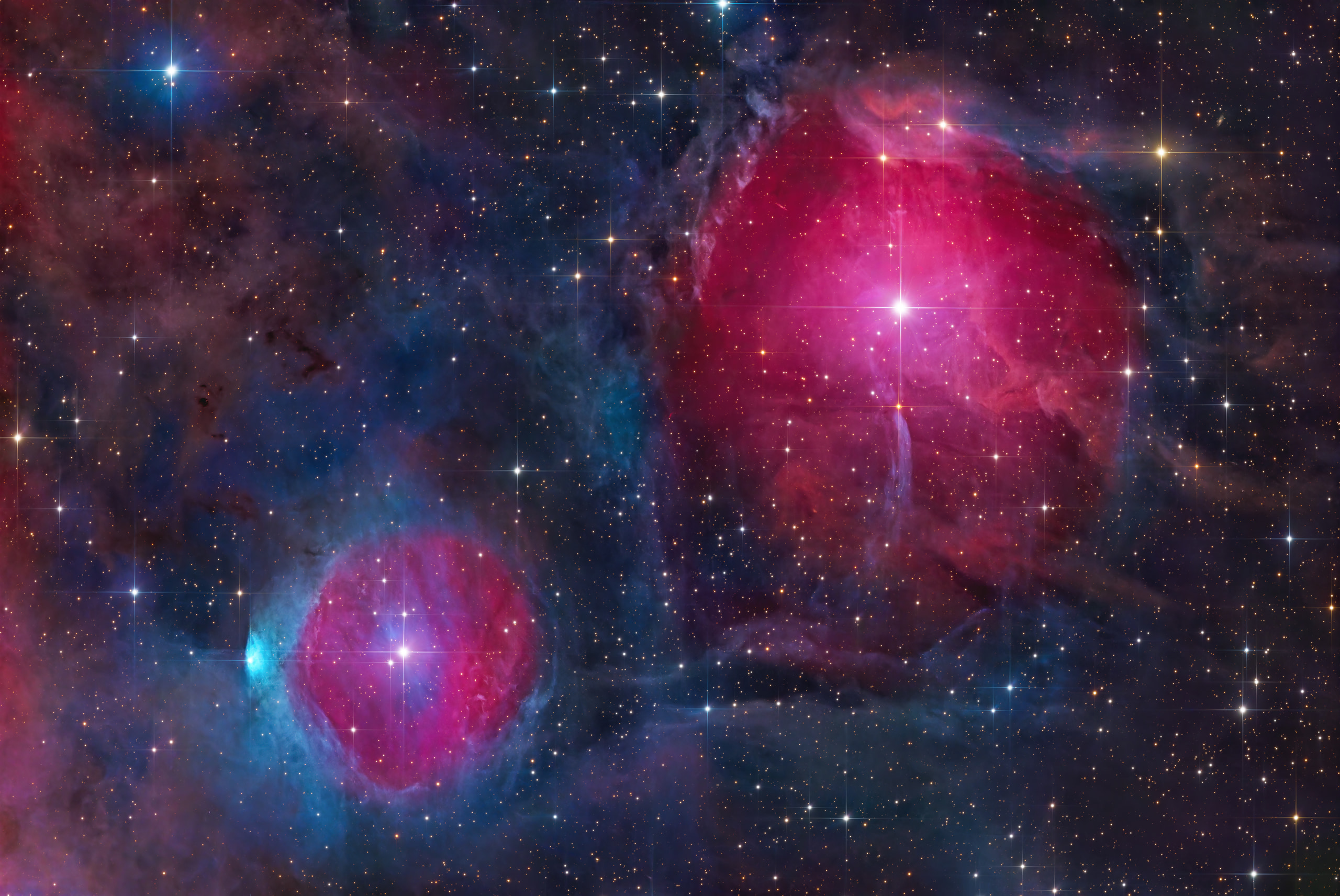
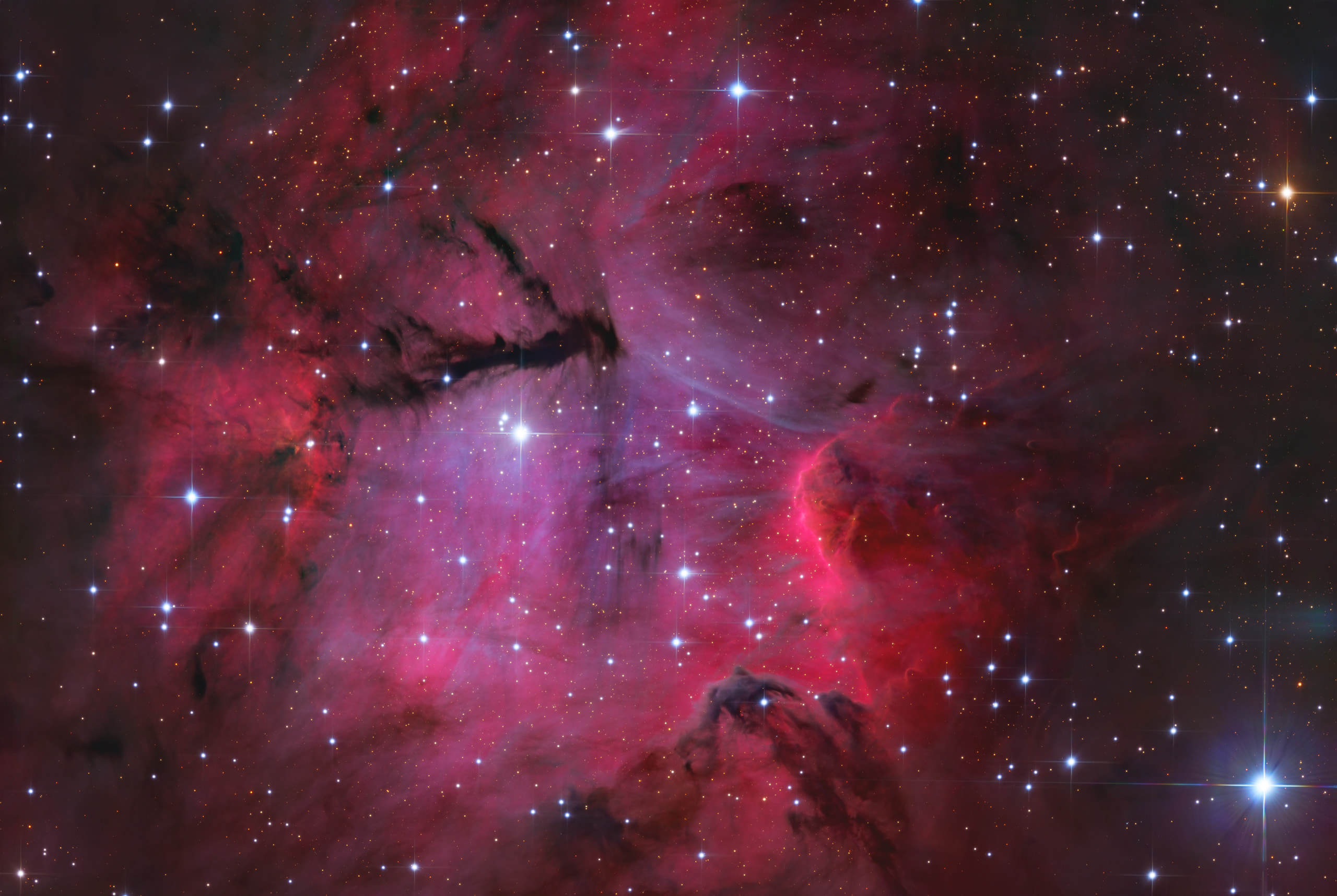
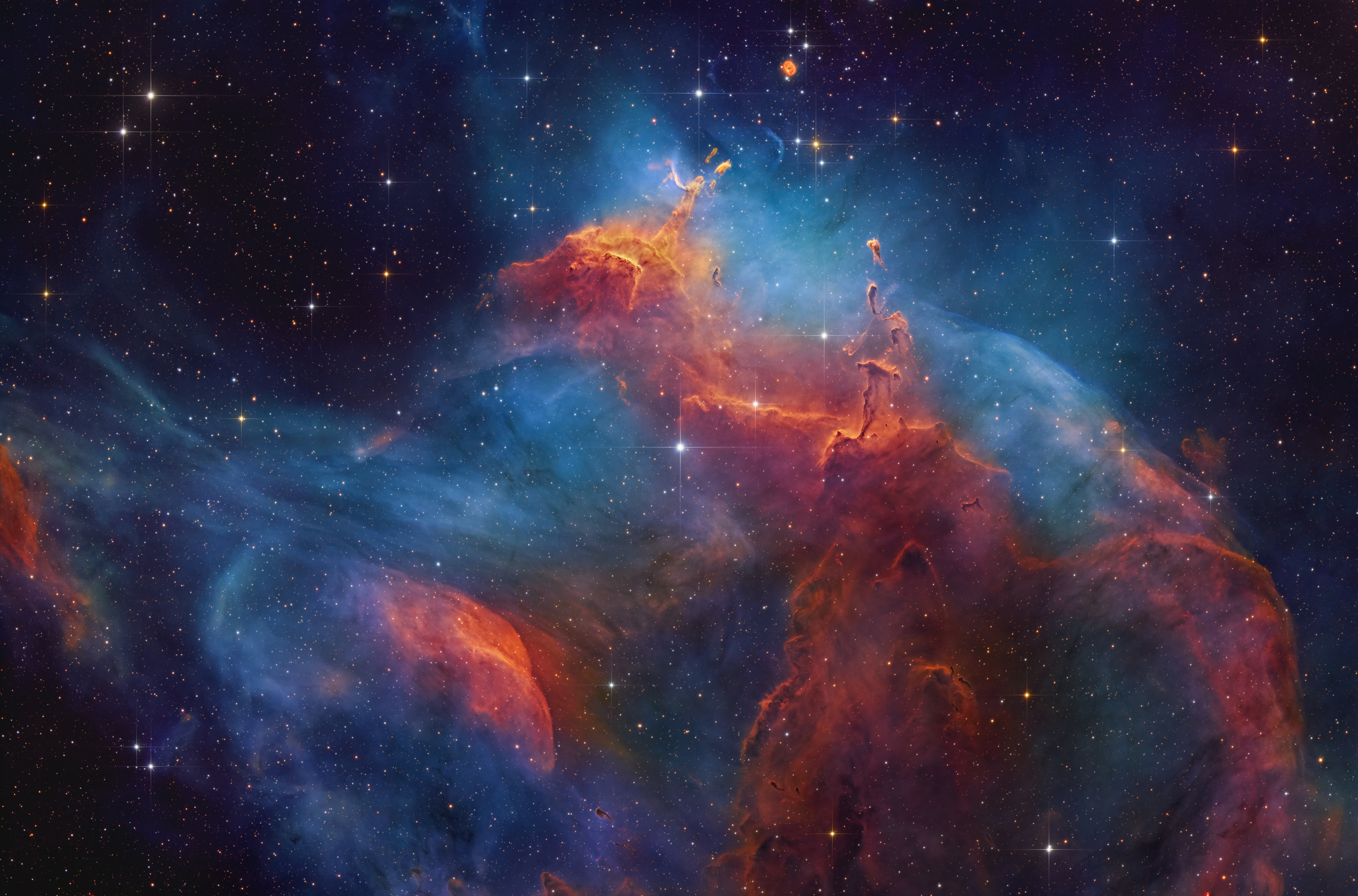
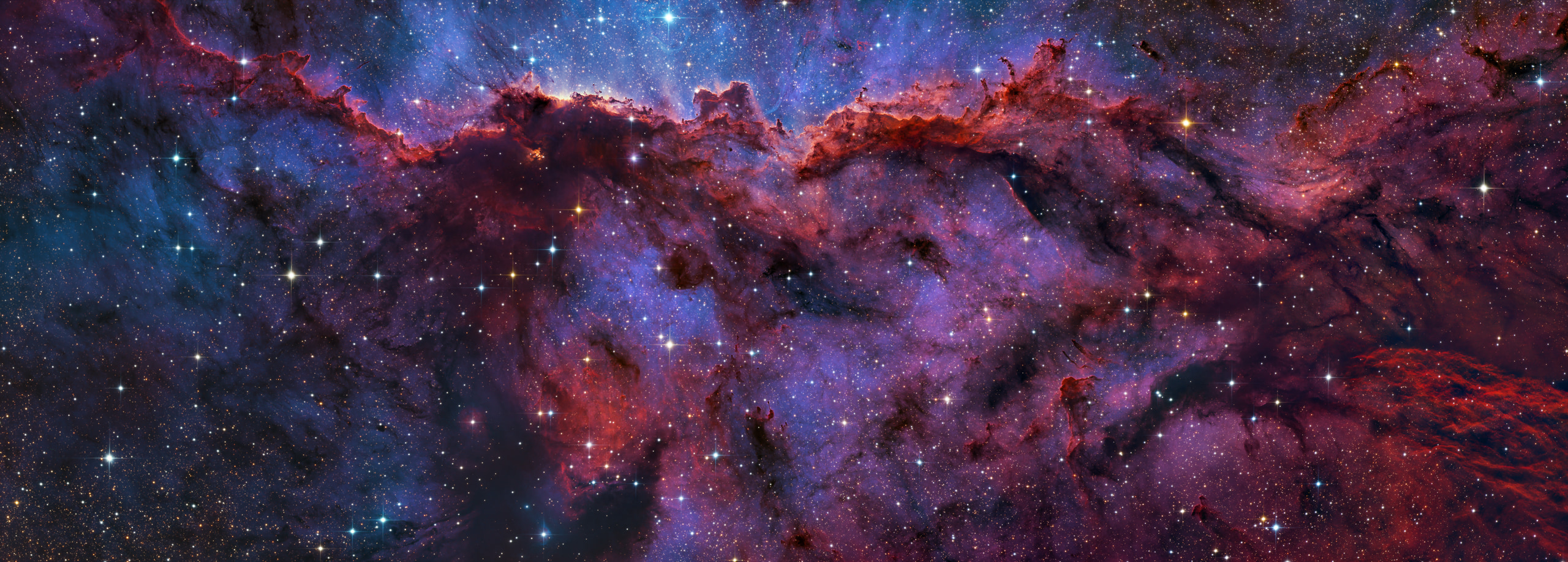
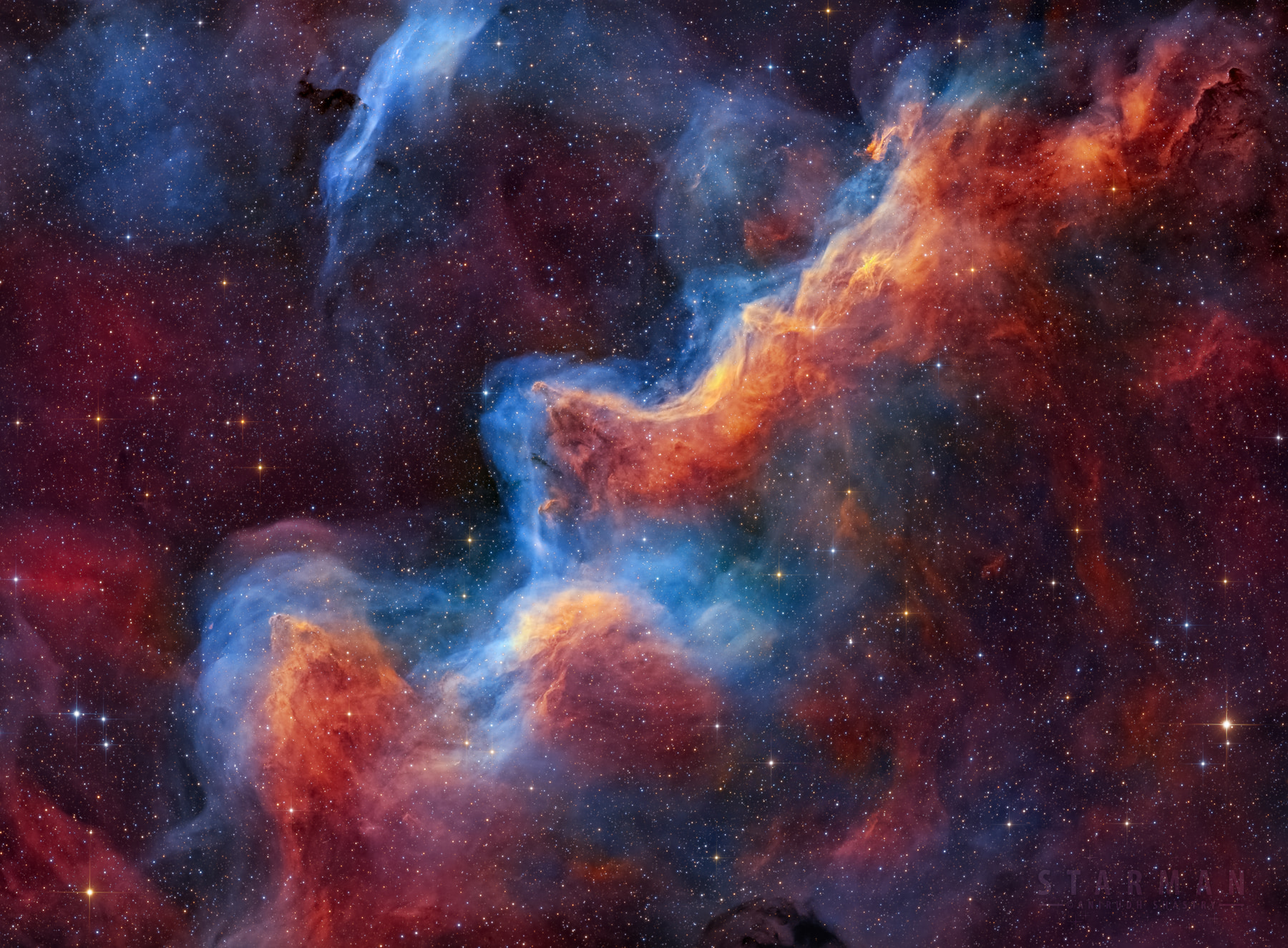
This nebula has no name. As far as I can find, no catalog has ever claimed it, so I am calling it the Carina Wall, because the moment it came up on screen I saw the Cygnus Wall staring back at me from the other end of the sky. Anyone who has imaged the Cygnus Wall knows that bright, buckled ridge of glowing hydrogen, where a curtain of light breaks like surf against a dark cloud. This is its southern twin.
The field lies about a degree and a half south southwest of Eta Carinae, on the far flank of the Great Carina Nebula where its glow thins toward the dark. I checked the coordinates against SIMBAD. Within half a degree there is no NGC or IC number, no RCW or Gum entry, only anonymous radio sources, molecular clouds, and a dark nebula from Dobashi’s survey. This is a piece of Carina hiding in plain sight, too far from the spotlight to draw a name.
And it is anything but quiet. The wall runs diagonally across the frame as a long, layered cliff of gas, its face lit gold and orange where the ultraviolet flood from Carina’s massive stars breaks against it. This is an ionization front, a molecular cloud being eaten alive by the radiation of a hundred O stars. Along the crest the rim splinters into hairline filaments and tattered pillars. Above it hangs a cool blue mist of doubly ionized oxygen, streaming off the wall like spray from a wave, while behind it the sky deepens into crimson sulfur, the shielded gas that has not yet felt the full weight of the light.
Nearly twenty nine hours went into this rendering, most of it in 1200 second narrowband subs. The oxygen was the prize. That blue haze along the crest is faint, and it took every subframe to lift it clear of the noise and let it drift where it belongs. The great nebulae do not end where the catalogs stop paying attention. Their outskirts are full of ramparts like this one, waiting for someone to point a telescope a little farther from the light and simply look.
Captured from my remote setup at Obstech in Chile:
🔭 PlaneWave CDK500 Observatory System
📸 Moravian C5A-100M Camera
🎨 Chroma R, G, B, 3nm Ha, Oiii and Sii Filters
📀 R: 17×120s, G: 16×120s, B: 16×120s, Ha: 27×1200s, Oiii: 28×1200s, Sii: 27×1200s (28.97 hours)
🖥️ Processed in PixInsight and Adobe Photoshop